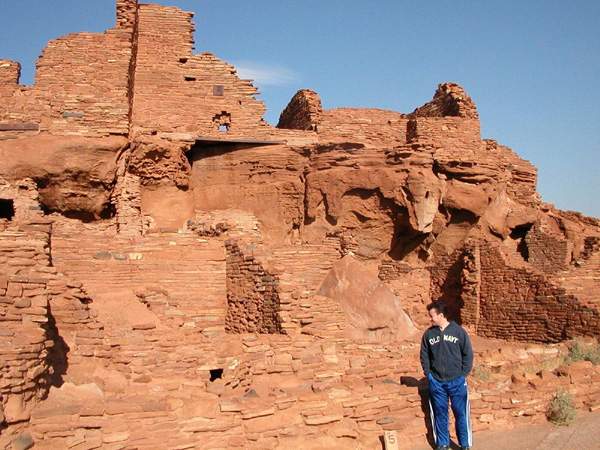
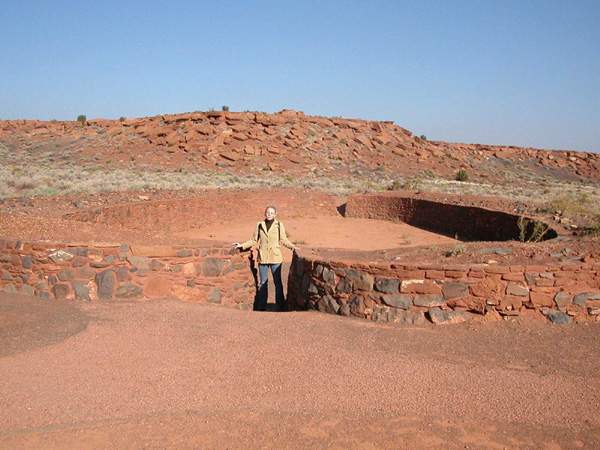
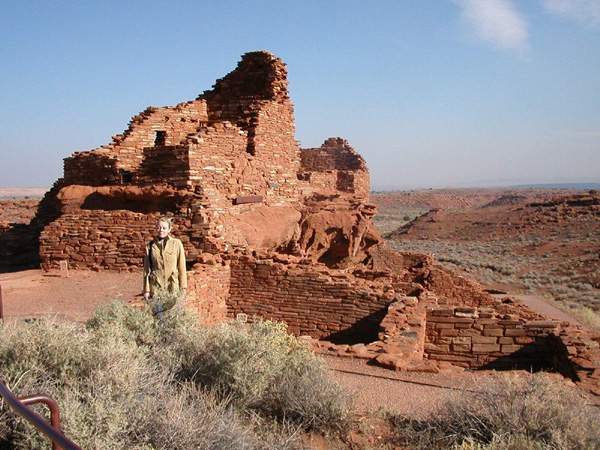
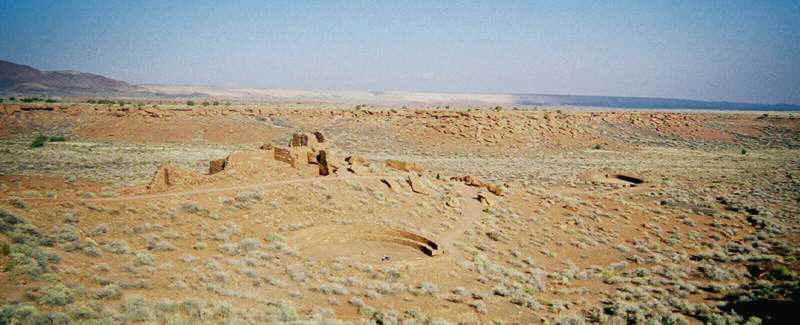
For its time and place, there was no other pueblo like Wupatki. Less than
800 years ago, it was the tallest, largest, and perhaps the richest and most
influential pueblo around. It was home to 85-100 people, and several thousand
more lived within a day’s walk. And it was built in one of the lowest,
warmest, and driest places on the Colorado Plateau.
Human history here spans at least 10,000 years. But only for a time, in the
1100s, was the landscape this densely populated. The eruption of nearby Sunset
Crater Volcano a century earlier probably played a part. Families that lost
their homes to ash and lava had to move. They discovered that the cinders
blanketing lands to the north could hold moisture needed for crops.
As the new agricultural community spread, small scattered homes were
replaced by a few large pueblos, each surrounded by many smaller pueblos and
pithouses. Wupatki, Wukoki, Lomaki, and other masonry pueblos emerged from
bedrock. Trade networks expanded, bringing exotic items like turquoise, shell
jewelry, copper bells, and parrots. Wupatki flourished as a meeting place of
different cultures. Then, by about 1250, the people moved on.
The people of Wupatki came here from another place. From Wupatki, they
sought out another home. Though no longer occupied, Wupatki is remembered and
cared for, not abandoned.