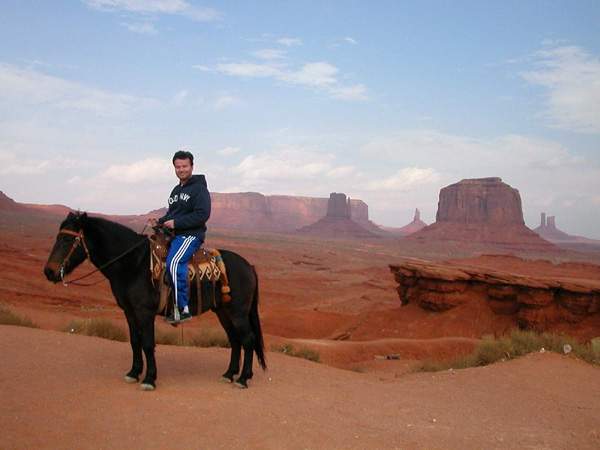
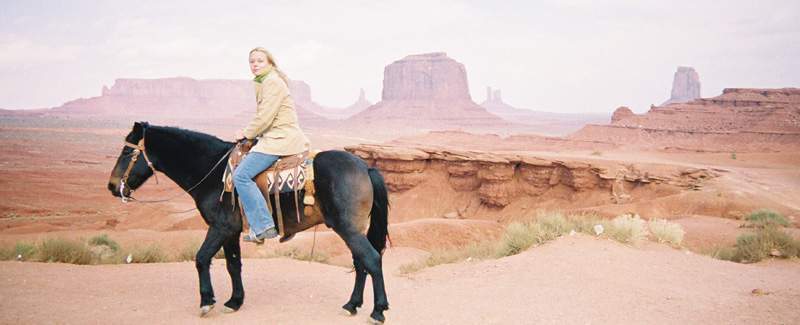
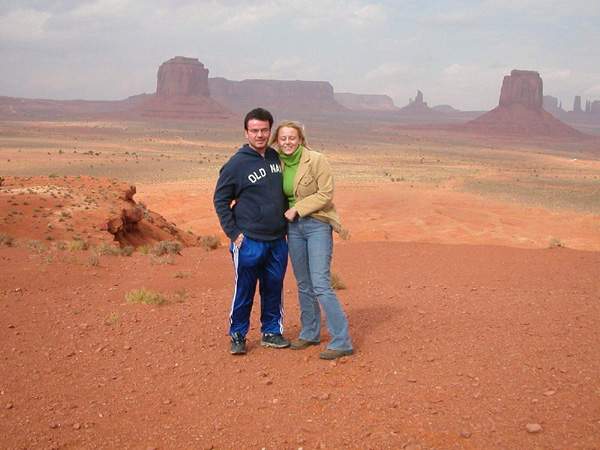
Monument Valley is a Navajo Nation tribal park, straddling
the border of northeastern Arizona and southeastern Utah of the Colorado
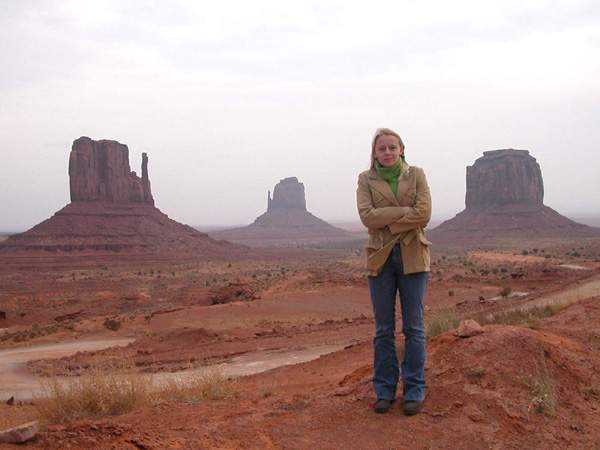
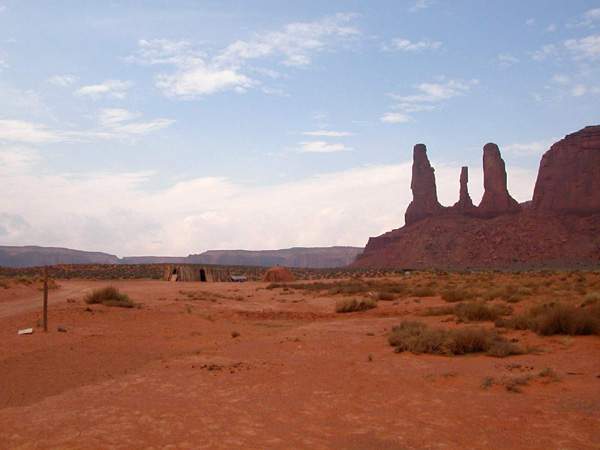
Plateau. It preserves the Navajo way of life and some of the most striking and
recognizable landscapes of sandstone buttes, mesas and spires in the entire
Southwest. The area is entirely within the Navajo Indian Reservation near the
small Indian town of Goulding, establised in 1923 as a trading post, and now
has a comprehensive range of visitor services.
Ice Age Paleo-Indian hunters occupied the Monument Valley
area between 12,000 and 6,000 BC. Archaic hunter-gatherers left evidence
between 6,000 BC and the Christian Era. Anasazi farmers arrived about the
beginning of the Christian Era and suddenly disappeared around 1300. Because
of their unique pottery styles, they are called the Kayenta Anasazi. As early
as the 1300s, San Juan Band Paiutes frequented the area as temporary hunters
and gatherers. They named it "Valley or Treeless Area Amid the
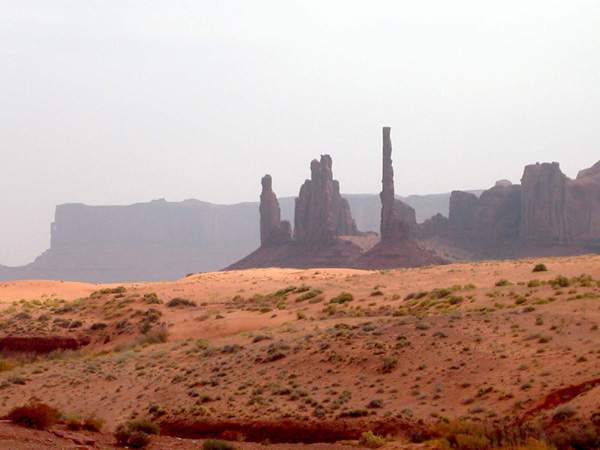
Rocks" and ascribed supernatural powers to the area. For example, Totem
Pole Rock is said to be a god held up by lightning, El Capitan a
sky-supporter, and all of Monument Valley near Goulding's Trading Post a hogan
that faces east.
Spanish and Mexican expeditions arrived in the 1700s to
explore the area and to control Navajo raiders. In the early 1860s, Kit
Carson, accompanied by Utes, rounded up Navajos who had fled to Navajo
Mountain. He relocated them to a reservation, but most Navajo returned in 1868
to find themselves competing with prospectors seeking silver. Ernest Mitchell
and James Merrick were killed by Utes or Paiutes near the monoliths that still
bear the miners' names.
Monument Valley became world famous when it was featured in
many western film classics, including John Ford's Stagecoach, She Wore a
Yellow Ribbon and Cheyenne Autumn. The Navajo Nation established the tribal
park that includes some of the most dramatic buttes, mesas and monoliths,
making the area accessible to thousands of tourists who visit the region each
year and providing a major source of income to the Navajo people.