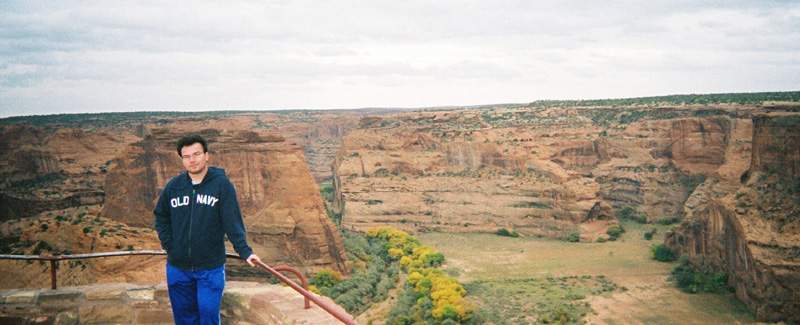
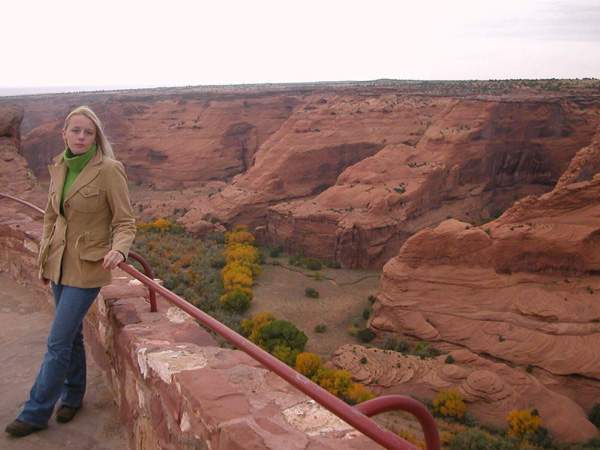
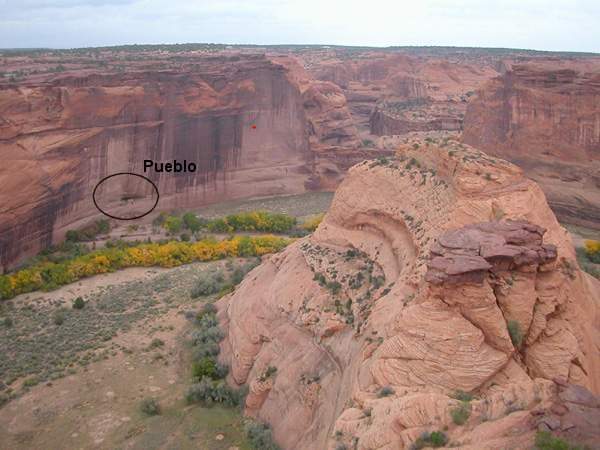
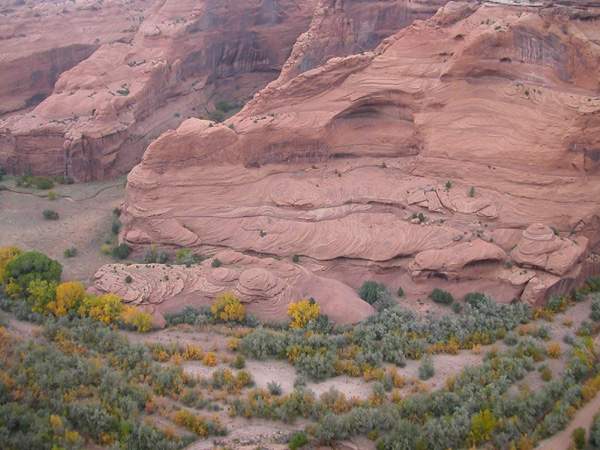
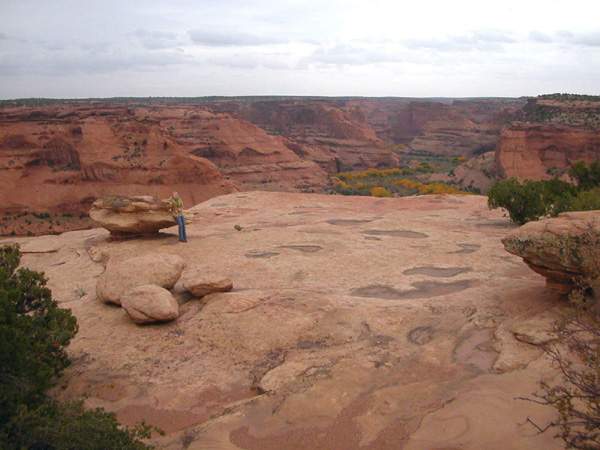
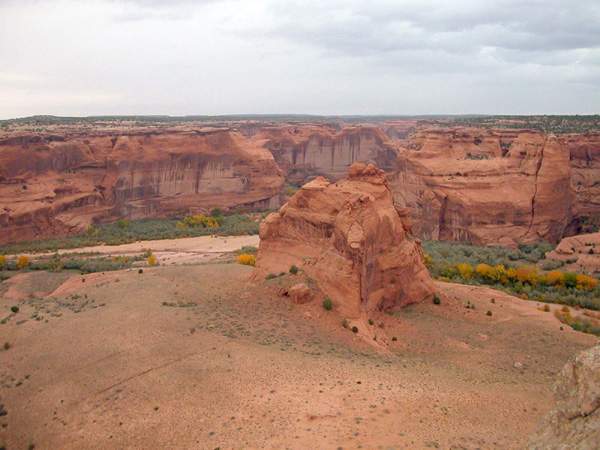
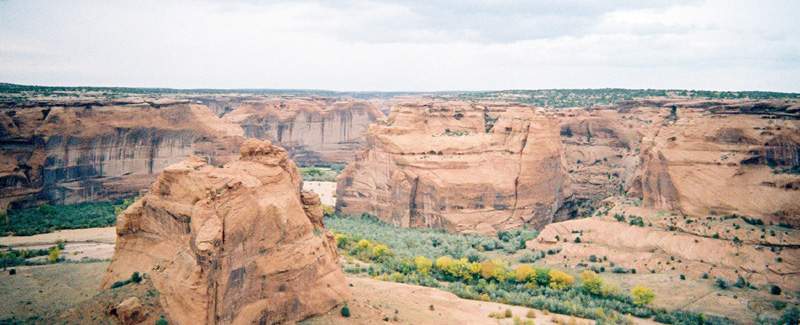
At the base of sheer red cliffs and in canyon wall caves are ruins of
Indian villages built between AD 350 and 1300. Canyon de Chelly National
Monument offers visitors the chance to learn about Southwestern Indian history
from the earliest basket makers to the Navajo Indians who live and farm
here.
Canyon de Chelly was designated a national monument in 1931
to protect and preserve the numerous archeological resources long known to
exist here on the canyon rims, walls and bottomlands. Thanks to an arid
climate and the shelter of numerous caves and overhangs, an unusual variety of
delicate artifacts and organic remains has been preserved.
These sites exhibit more than 1500 years of human occupation
containing early pithouses, cliff dwellings, and more contemporary Navajo Hogan's
established long after the original inhabitants -- the Anasazi -- abandoned
the area around 1200 A.D. There are also numerous petroglyphs and rock
drawings throughout the lengths of Canyon de Chelly.
Canyon de Chelly today is an 84,000-acre archeological sanctuary administered
jointly by the National Park Service and the Navajo Nation. At Canyon de
Chelly, archeologists can observe the transition of prehistoric Anasazi to
historic Pueblo, as well as Navajo history and modern life. There are still
many unexcavated sites here available for future study.